
Ecommerce SEO Guide: How to Optimize Your Store for More Traffic and Sales in 2026
Introduction (APP Method)
Most ecommerce stores struggle with one big problem. They get traffic, but not enough sales. Others spend heavily on ads but still fail to build long-term growth. Without following a proven ecommerce SEO guide, your store becomes invisible in search results exactly where buying decisions actually happen.
This ecommerce SEO guide will show you how to fix that. You’ll learn how to optimize product pages, improve site structure, and attract high-intent traffic that converts into real customers.
In this guide, you’ll also understand how ecommerce SEO works in 2026, why it is more important than ever, and how to build a system that grows your store sustainably.

What is Ecommerce SEO?
Ecommerce SEO is the process of optimizing an online store so it appears in search engines when people look for products.
It includes:
- Product page optimization
- Category page structure
- Technical SEO improvements
- Content and keyword strategy
The main goal is simple. Bring people who are already interested in buying your product.
So instead of paying for every click, you attract organic visitors who are ready to purchase.
Why Ecommerce SEO Matters in 2026
Search behavior is changing fast. AI results, voice search, and zero-click answers are reducing traditional website traffic.
Because of this, ranking on Google is no longer enough. Your store must also appear in rich results, AI summaries, and product snippets.
At the same time, advertising costs are increasing. This makes organic traffic even more valuable.
In short, ecommerce SEO is no longer optional. It is a long-term growth system for any serious online business.
How to Do Keyword Research for Ecommerce
Good SEO starts with understanding how people search.
Customers don’t always search with product names. They search with problems, comparisons, and intent.
For example:
- Informational: “best shoes for standing all day”
- Comparison: “Nike vs Adidas running shoes”
- Buying intent: “Nike Pegasus 40 size 9 buy online”
This shows the customer journey from research to purchase.
To find keywords:
- Use Google Search Console
- Check customer questions and reviews
- Use SEO tools like Ahrefs or Semrush
- Study competitors
Group keywords based on intent instead of volume. This helps you create better category pages and product pages.
How to Optimize Product Pages for SEO
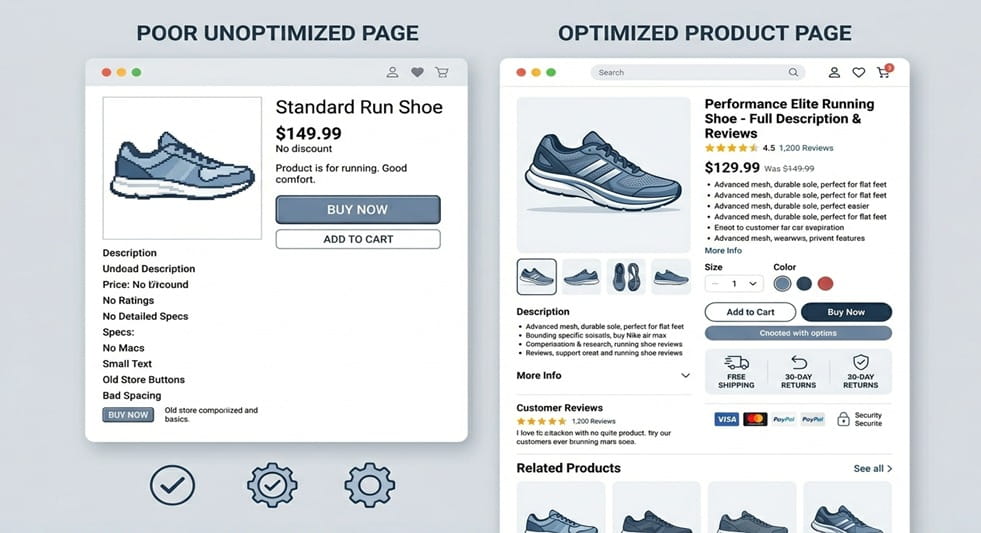
Product pages are where visitors become buyers. So they must do more than just show a product.
A strong product page should:
- Match search intent
- Build trust
- Highlight benefits clearly
Example of optimization:
Instead of:
“Nice running shoes”
Use:
“Nike Pegasus 40 Men’s Running Shoes – Lightweight Comfort & Breathable Design”
Better product descriptions focus on:
- Benefits (comfort, durability, performance)
- Use cases (running, gym, daily wear)
- Clear details (size, material, features)
Also improve:
- Titles with keywords
- Image alt text
- Structured data (price, reviews, availability)
👉 This helps both SEO and conversions.
How to Optimize Category Pages
Category pages are powerful for SEO because they target broader searches.
For example:
- “Running shoes”
- “Winter jackets”
- “Protein supplements”
These pages bring high traffic with strong buying intent.
To optimize them:
- Add short keyword-rich descriptions
- Use filters (size, brand, price)
- Add internal links to products
- Keep clean URL structure
Good category pages guide users easily while helping search engines understand your site structure.
Technical SEO for Ecommerce Sites
Technical SEO ensures your site is fast, crawlable, and mobile-friendly.
Key factors include:
- Site Speed
Slow websites lose customers quickly. Optimize images and use fast hosting.
- Mobile Optimization
Most users shop on mobile. Your site must be fully responsive.
- Structured Data
Add schema for:
- Products
- Reviews
- Pricing
- Availability
- Indexing Control
Avoid duplicate pages and unnecessary filter URLs.
These improvements help search engines understand your store better.
Site Structure and Internal Linking

A strong site structure improves both SEO and user experience.
Keep your structure simple:
- Home → Category → Product
Avoid deep navigation.
Internal linking helps:
- Pass authority between pages
- Improve indexing
- Guide users to products
For example, a blog about “best running shoes” should link to relevant product pages.
Content Strategy for Ecommerce SEO
Content is not just for blogs. It supports the entire sales funnel.
You should create:
- Buying guides
- Product comparisons
- How-to articles
These attract users early in their journey and guide them toward purchase.
This builds trust and increases conversions over time.
Tracking Ecommerce SEO Performance
To measure success, focus on real business metrics:
- Organic traffic
- Conversion rate
- Revenue from organic search
Use:
- Google Analytics 4
- Google Search Console
This shows how SEO is contributing to actual sales, not just traffic.
Future of Ecommerce SEO
SEO is evolving. AI search, voice search, and zero-click results are changing how users find products.
To stay ahead:
- Use structured data properly
- Write clear, direct answers
- Build authority in your niche
- Optimize for AI-driven search results
Brands that adapt early will dominate future search visibility.
Conclusion
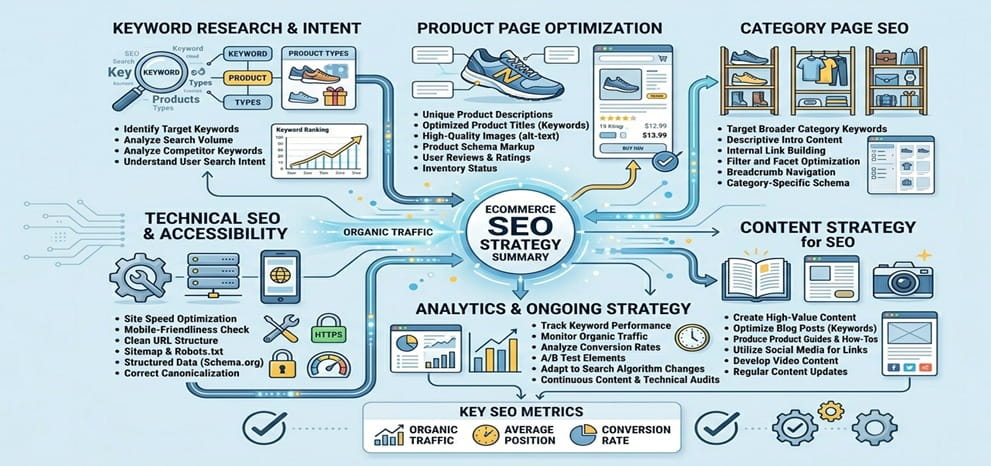
Ecommerce SEO is not just about ranking on Google. It is about building a system that brings consistent, high-quality traffic that converts into sales.
When you optimize product pages, improve structure, and understand search intent, your store becomes more visible and more profitable.
In 2025 and beyond, success will depend on how well you align your content with user intent and search behavior.
If you apply these strategies correctly, your ecommerce store can grow steadily without relying heavily on ads.